The Pony Alpha Incident: When “Free” AI Means You’re The Product

A Case Study in Training Data Harvesting via Correction Loops Author: Dimitris KokoutsidisDate: February 11, 2026Classification: Security Research / AI EthicsDisclosure: Responsible – No active exploitation detailed Executive Summary This analysis does not assert operator intent; it documents incentive-aligned outcomes observable from system behavior. On February 6, 2026, a “stealth model” called Pony Alpha launched


Read More

Why It Is Extremely Dangerous for a European Company to Own Only a .com Domain

Executive Summary For a European company, owning only a .com domain while not controlling the corresponding .eu and .localCountry domains is not a minor oversight. It is a structural cybersecurity weakness that dramatically reduces attacker cost, increases attack success rates, and amplifies legal and reputational fallout. This article explains — in concrete, operational terms —

Read More

Practical Mitigation Steps: A Comprehensive Defense against hidden Threats in macOS.

RustyAttr trojan’s Exploitation of Extended Attributes Cyber threats are evolving rapidly, and attackers are finding increasingly sophisticated ways to bypass detection. One of the latest techniques comes from the Lazarus Group, a well-known Advanced Persistent Threat (APT) actor. Their novel approach involves hiding malicious code in macOS extended attributes (xattr), allowing them to stealthily execute

Read More

No CAA = Open Door for Fraud: Why CAA Records Should Be Mandatory

The internet is built on trust, and HTTPS is a cornerstone of that trust. However, many domain owners unknowingly leave a critical security gap wide open by neglecting to configure CAA (Certificate Authority Authorization) records in their DNS settings. Without CAA records, any Certificate Authority (CA) can issue an SSL/TLS certificate for your domain, whether you authorized it or not.
This guide explores the importance of CAA records, why they should be mandatory, and how to set them up correctly with best practices and lessons learned.

Read More

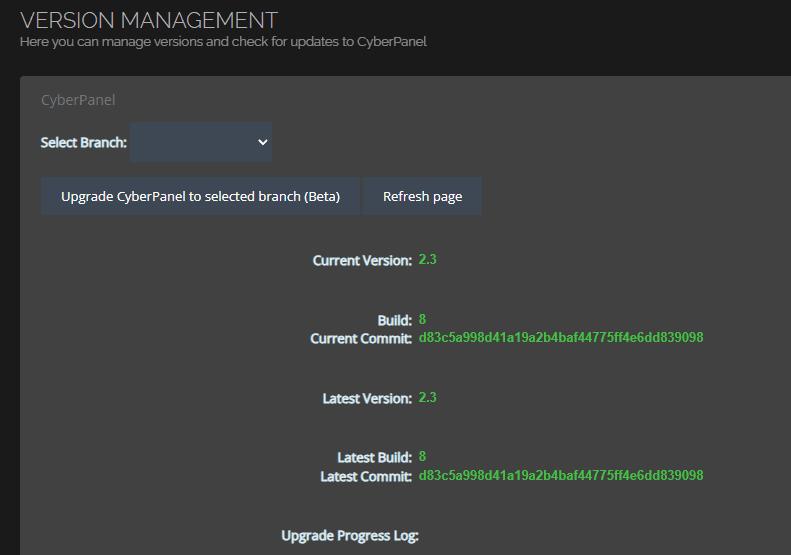
Essential Pre-Step for a Critical CyberPanel Upgrade

In late October 2024, security researchers uncovered multiple zero-day vulnerabilities affecting CyberPanel versions 2.3.6 and 2.3.7, leading to unauthorized root access on over 22,000 servers and widespread PSAUX ransomware attacks. These critical vulnerabilities make it essential for CyberPanel users to upgrade immediately to the latest, patched version to protect their servers. Here’s a breakdown of the vulnerabilities and a step-by-step guide to upgrade your CyberPanel installation safely.

Read More

Windows Let’s Encrypt Setup for FileMaker Server: Secure! SSL Certificates

Securing your FileMaker Server with SSL certificates is crucial for protecting data and ensuring secure connections. With the release of FileMaker Server 2024, official support for Let’s Encrypt SSL certificates is available for macOS and Ubuntu. However, Windows users are still awaiting official support. In the meantime, this guide provides a secure method to implement Let’s Encrypt SSL certificates on FileMaker Server for Windows, emphasizing best security practices to protect your server.

Read More